
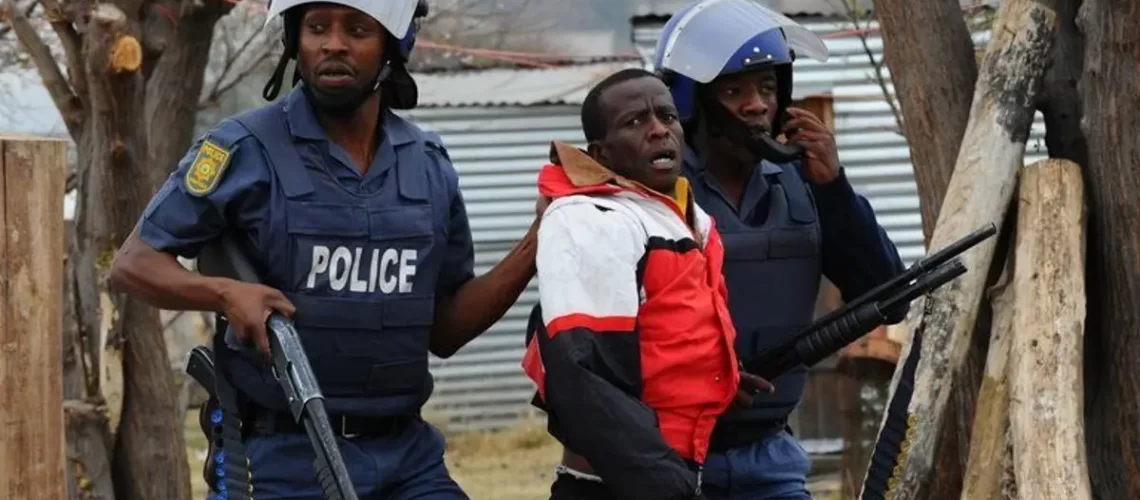
In the fabric of society, the perception of law enforcement agencies plays a vital role in maintaining peace, order, and justice. The dynamics of how the police are perceived by the community are complex, often influenced by a myriad of factors. In this discourse, we embark on a profound journey to explore the deep-seated significance of how the community perceives its police force.
Police and the Community
The relationship between the police and the community is the bedrock of effective law enforcement. To unravel this complex interplay, we need to delve into sociological perspectives. Drawing from the seminal work of Howard Becker, a pioneering figure in labeling theory, we come to comprehend how societal perceptions can shape an individual or a group. The labels that society assigns can significantly affect the experiences and interactions of those labeled, in this case, the police.
But trust between the police and the community, as sociologist Lawrence W. Sherman asserts, is not inherent. It must be nurtured. Sherman’s extensive research on community-oriented policing gives us valuable insights into the strategies law enforcement can employ to cultivate trust and cooperation.
This trust-building is where community engagement initiatives come into play. In the footsteps of criminologist David Weisburd, we explore exemplary programs that bridge the gap between law enforcement and the community. Weisburd’s pioneering research on problem-oriented policing and hotspots policing forms the basis for these initiatives. These programs have proven to be instrumental in improving public trust and forging a more secure environment.

Media and Law Enforcement Relations
The dynamics of the police’s perception within the community do not occur in a vacuum; they are profoundly influenced by the role the media plays in shaping public opinion. The media’s portrayal of law enforcement can have a profound impact on public perception. Unfortunately, this relationship often proves to be a double-edged sword, where objectivity and accuracy are sometimes sacrificed for sensationalism and ratings.
The media holds a powerful position in our society, shaping public opinion and influencing policy. Journalists, as the Fourth Estate, are bestowed with the duty to hold authorities accountable. However, in this age of 24-hour news cycles, sensationalism often takes precedence over accuracy. This prevailing trend of ‘if it bleeds, it leads’ has a pronounced effect on how the community perceives its police force.
This conundrum is not merely a matter of perception but extends into the realm of policy and law enforcement’s ability to fulfill its duties effectively. The study by Larry Jones, “Impact of the Media on Law Enforcement,” delves into this complexity. Jones’ exploration of how media impacts the daily lives of law enforcement officers offers an eye-opening account of the uphill battle police officers face when it comes to community perception.
Regulation and management of media relations in law enforcement are of paramount importance, as emphasized in the Law Enforcement Media Relations Handbook. This guide is not just a regulatory document; it is a cornerstone for achieving effective communication between law enforcement agencies and the media. Its principles aim to balance the need for transparency and accountability with the potential for sensationalism and public misinformation.
The handbook places a significant focus on the necessity of pre-established relationships between law enforcement and the media. The structure advocated therein ensures that information flows seamlessly and that the media can perform their role of the Fourth Estate without undermining the public’s trust in law enforcement.
As we wade through the complex waters of media influence, it is imperative to remember that the media can serve as a conduit to foster public trust in the police. Journalists can play an indispensable role in highlighting law enforcement’s community-oriented initiatives, humanizing officers, and providing objective coverage of events. Their capacity to educate the public on law enforcement challenges and successes is invaluable.
Yet, as with any powerful tool, the media should be wielded responsibly. Sensationalism that stokes public fear and mistrust is detrimental to the society as a whole. The media must be vigilant in adhering to ethical reporting standards, and law enforcement agencies should continue to strive for transparency in their communications.
However, in the age of digital information and social media, a new dimension has emerged. The instantaneous nature of information sharing has given rise to an environment where misinformation can spread like wildfire. The propagation of false narratives can be deeply damaging to both public perception and the safety of police officers.
Hence, it is incumbent upon both the media and law enforcement to navigate these treacherous waters with a firm commitment to truth and objectivity. The media should aim to provide balanced and informed reporting, upholding their responsibility as the Fourth Estate, while law enforcement agencies should ensure that transparency is not a buzzword but a guiding principle in their interactions with the media.
The intricate interplay between media and law enforcement relations is an issue that demands our utmost attention. How the media portrays the police can significantly influence public perception, thereby affecting law enforcement’s ability to protect and serve effectively. To achieve a harmonious society where law enforcement agencies and the community trust and support each other, media regulations and ethical reporting standards must be our compass. As we journey into an age marked by the rapid dissemination of information, it is essential that we reflect on the profound responsibility both the media and law enforcement bear in shaping our collective understanding of justice and public safety.

The Role of Education and Culture
The very essence of a society is sculpted by its educational system and cultural values. The impact of these aspects on shaping public perceptions of the police is undeniable. However, the current landscape of education across the globe, especially in Italy and Spain, often falls short in preparing individuals to be informed, critically thinking citizens. Meanwhile, the American educational system is, at times, criticized for producing automatons more than thoughtful individuals.
It is no secret that the education system in many countries struggles to offer a comprehensive and balanced view of the world, leaving the next generation susceptible to biases and misconceptions. The curriculum’s failure to provide a holistic understanding of law enforcement often contributes to negative public perceptions. The impact of this educational shortcoming is far-reaching and goes beyond mere public perception; it extends into the very structure of society.
In Italy and Spain, the education systems, though rich in cultural history, often focus more on memorization than on critical thinking. As a result, generations are growing up without the ability to dissect complex issues, including the dynamics of law enforcement. This lack of critical thinking leads to a narrow perspective, contributing to negative stereotypes surrounding the police.
The American educational system, while striving for innovation, often falls into the trap of standardization, pushing students to conform rather than encouraging individuality and critical thinking. The ‘teach to the test’ model emphasizes memorization over analytical skills. This approach has ripple effects, as graduates can remain woefully uninformed about the complex interplay between law enforcement and society.
To address the issue of public perception of the police, the roots of education and culture must be examined. A well-rounded curriculum that delves into the role of law enforcement in society, its challenges, and the importance of community policing can be transformative. Encouraging open discussions in classrooms and presenting students with real-world scenarios can be the first step towards fostering understanding and trust.
In the United States, initiatives such as the “Officer Friendly” program have attempted to create a positive image of the police from an early age. These initiatives are aimed at elementary school children and intend to humanize law enforcement officers by showing them as friendly, approachable figures rather than intimidating authority figures. Such programs, when implemented effectively, have the potential to leave a lasting positive impression.
The complexities of police work, the challenges officers face, and the importance of adhering to the law should be ingrained in the education system. The approach should be proactive, instilling critical thinking skills and empathy, which can empower students to form their own opinions rather than being swayed by sensationalized media narratives.
The education system and cultural values significantly influence public perceptions of the police. The deficiencies in these areas, especially in Italy, Spain, and the United States, contribute to the negative stereotypes associated with law enforcement. It is imperative that education systems around the world undergo a transformation. By fostering critical thinking, empathy, and a comprehensive understanding of law enforcement, we can pave the way for a more informed and supportive society that appreciates the complexities of the police’s role in maintaining peace and order.

Shaping a Better Tomorrow
In the grand tapestry of society, the perceptions of law enforcement are woven from threads of media portrayals, community relations, and educational foundations. We must recognize that public opinion, whether positive or negative, is not predetermined. Instead, it is a malleable entity, profoundly influenced by culture and education.
As we navigate this challenging terrain, it’s crucial to acknowledge that the status quo in education and culture is not set in stone. By addressing the shortcomings in these areas, we can hope to create a more informed, compassionate, and equitable society. This transformation begins with a clear understanding of the impact of these two pillars on public perception.
As we’ve discussed, the Italian, Spanish, and American education systems may sometimes fall short in preparing individuals to be well-informed, critical thinkers. To enhance the perception of law enforcement, these systems should include a more comprehensive and balanced view of the role of the police in society. This transformation calls for proactive approaches in curricula, encouraging open dialogues, and presenting students with the real-life complexities faced by law enforcement.
It is, indeed, a lofty endeavor. However, the long-term benefits are immeasurable. Empowering students to think critically and fostering empathy can lead to the formation of a society that values the complexities of the police’s role and appreciates the immense responsibility they bear. With the public’s understanding, law enforcement can better fulfill its mission of maintaining peace and order.
In a world of sensationalized media narratives, the path to an improved public perception of the police may seem challenging. Nevertheless, positive change is possible. The “Officer Friendly” program and initiatives like it are just a glimpse of the potential impact of an informed and empathetic culture.
The link between education, culture, and public perception is irrefutable. By addressing these issues head-on, we are taking a significant step towards a society that better understands, supports, and values the work of law enforcement. It is in this transformation that we find the keys to a stronger, safer, and more just world.
As I delve into the complexities of public order and law enforcement on my blog Commander Zero, I am deeply aware that with the right foundation of knowledge and empathy, public order challenges can be met without sacrificing the principles of justice and integrity. The strength of a community lies in its unity and understanding. Together, we can navigate the complexities and challenges that law enforcement faces, fostering a more supportive and harmonious future.
Let us not merely lament the state of public perception, but actively participate in its transformation. Just as society shapes perceptions, so too can we shape society. It’s time to empower the next generation with knowledge, empathy, and an unwavering commitment to justice, creating a world where the thin blue line between chaos and order is honored and strengthened.
