
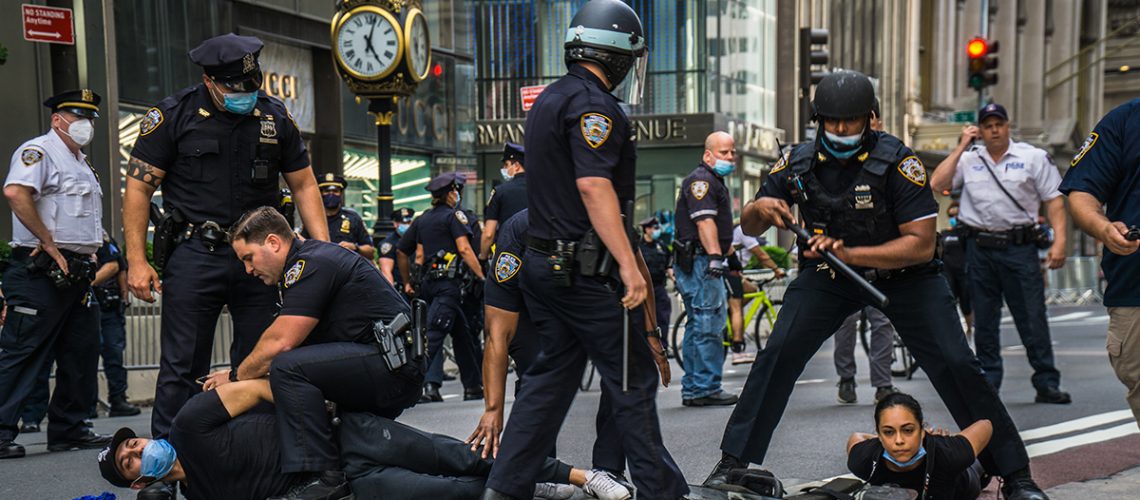
Training scenarios are meticulously crafted environments where law enforcement officers, including K-9 units, can hone their skills and prepare for real-world challenges. Yet, as any experienced officer will attest, there is an undeniable and profound gap between training exercises and the unpredictable nature of actual fieldwork.
In training, our psychological framework is fundamentally shaped by an underlying certainty: we are safe. This foundational assurance profoundly influences our responses and actions. During training sessions, we know that our instructors will not inflict serious harm, nor will they endanger our K-9 partners’ lives. This element of safety, while necessary for learning, creates a mental barrier that does not exist in real-life scenarios.
Dr. Steven J. Thompson, a renowned expert in police psychology, emphasizes, “The controlled environment of training cannot replicate the acute stress and unpredictability of real-world situations. This discrepancy can create a false sense of security that may hinder officers’ ability to respond effectively in the field” (Thompson, 2020).
In real life, law enforcement officers face genuine threats where the stakes are incredibly high. The perpetrators are unpredictable, the danger is real, and the potential for harm or death is ever-present. This reality starkly contrasts the controlled, predictable, and ultimately safe environment of training exercises.
The psychological impact of this discrepancy is significant. During training, officers are conditioned to expect certain outcomes and responses within a secure framework. This conditioning can sometimes lead to a cognitive dissonance when faced with the raw, unfiltered threats of the real world. The mental preparedness fostered in training does not entirely translate to the field, where there is no assurance that “everything will be okay.”
Moreover, the K-9 units, integral to law enforcement, add another layer of psychological complexity. Officers develop strong bonds with their K-9 partners, treating them not just as tools, but as companions and team members. The thought of their K-9 facing real danger is a psychological burden that training rarely, if ever, addresses adequately. As Dr. Karen R. Matthews notes, “The emotional bond between a handler and their K-9 partner can both motivate and distract an officer, impacting their split-second decision-making in high-stress situations” (Matthews, 2019).
The reality gap between training and actual duty underscores the need for more immersive, realistic training scenarios that better prepare officers for the unpredictable nature of their work.
We’ve touched on this subject previously in our article From Classroom to Patrol Car: The Dichotomy of Policing Environments Explored, but here, we’ll delve into real solutions to better align training with the realities of the field.

Constant Stress in Anticipation of an Event You Know is About to Happen
In any training environment, especially those designed to push stress to the limit, there is a constant, underlying awareness that something is about to happen. This anticipation triggers your body’s natural fight-or-flight-or-freeze response. However, this anticipation is tempered by the knowledge that, no matter what unfolds, it will not result in serious harm or put your life in real danger. This awareness fundamentally alters the psychological and physiological responses of trainees.
During high-stress training exercises, the body and mind are primed for action. The sympathetic nervous system activates, releasing adrenaline and preparing the body for either confrontation or escape. This response is essential for survival in genuine threats, as it heightens alertness, increases heart rate, and boosts energy supplies. Yet, in a controlled training environment, this response is mitigated by the understanding that the danger is not real.
Dr. David Grossman, a leading authority on the psychology of combat, explains, “The knowledge that one is not in actual danger significantly diminishes the intensity of the fight-or-flight response. This safe environment, while necessary for initial skill acquisition, does not adequately prepare individuals for the unpredictability and true peril of real-life encounters” (Grossman, 2008). This is an interesting article: https://www.army.mil/article/94495/david_grossman_combat_makes_soldiers_stronger
This paradox—being prepared for an event yet knowing it will not truly harm you—creates a unique psychological state. The expectation of an impending event keeps the body in a heightened state of readiness, yet the mind remains aware that the training scenario lacks genuine threat. This discrepancy can lead to a diminished capacity to respond effectively in real-world situations where the threat is both unpredictable and real.
Furthermore, this artificial anticipation can breed a false sense of security. Trainees become accustomed to the structured and foreseeable nature of training exercises, which do not adequately replicate the chaos and uncertainty of actual fieldwork. In the field, there is no script, and the potential for harm is ever-present. This discrepancy can lead to a dangerous gap in preparedness.
As Dr. Judith Herman notes in her seminal work on trauma and recovery, “Exposure to real, uncontrollable danger invokes a level of stress and psychological trauma that cannot be simulated in training. The body’s response to genuine threat is far more intense and complex than the controlled stress of training scenarios” (Herman, 1997).
The combination of bodily readiness and an understanding of safety in training creates a “false fear”—a state where the body is prepared, but the mind is not genuinely convinced of the danger. This mismatch can render traditional training methods obsolete and potentially hazardous, as they do not adequately prepare law enforcement officers for the unpredictability and severity of real-life situations.
Modern training programs must evolve to bridge this gap. Incorporating more realistic and unpredictable scenarios, while still maintaining safety, can help to better prepare officers. By simulating the unexpected and creating environments where the outcome is not guaranteed, trainees can develop more effective coping mechanisms and response strategies.

Virtual Reality? A Partial Answer?
Virtual reality (VR) has emerged as a cutting-edge tool for training in various fields, including law enforcement. By immersing trainees in simulated environments, VR can provide highly detailed and interactive experiences that are otherwise difficult to replicate. However, while VR offers several advantages, it also has notable limitations that must be addressed to determine its effectiveness as a training tool.
The Advantages of Virtual Reality Training
- Immersive Learning Environments: VR creates realistic scenarios where trainees can practice and refine their skills without real-world consequences. This immersion can improve engagement and retention of training material. According to Dr. Jeremy Bailenson, director of Stanford University’s Virtual Human Interaction Lab, “VR allows for the creation of a rich, sensory experience that can enhance learning and mimic real-world interactions more closely than traditional training methods” (Bailenson, 2018).
- Repetition and Consistency: VR enables trainees to repeatedly practice scenarios, ensuring consistent training experiences. This repetition is crucial for developing muscle memory and honing decision-making skills under pressure.
- Controlled Environment: In VR, trainers can control every aspect of the environment, allowing for the introduction of specific stressors and challenges in a safe and manageable way. This can help officers learn to manage stress and improve their response to high-pressure situations.
The Limitations of Virtual Reality Training
- Lack of Physical Sensations: One of the primary drawbacks of VR training is the absence of physical sensations such as pain, fatigue, and the tactile feedback that comes from interacting with the real world. These physical experiences are crucial for fully preparing officers for the realities of their job. Dr. Albert Rizzo, a leading VR researcher at the University of Southern California, notes, “VR can simulate visual and auditory experiences, but it cannot replicate the physical sensations of real-world interactions, which are critical for comprehensive training” (Rizzo, 2019).
- Missing Sensory Inputs: Real-life encounters involve a full range of sensory inputs, including smells, temperatures, and the feel of different textures, which VR cannot adequately simulate. These sensory experiences play a significant role in situational awareness and decision-making.
- Psychological Disconnect: Despite the immersive nature of VR, trainees are aware that they are in a safe, controlled environment. This awareness can dampen the intensity of their psychological and physiological responses. As Dr. Skip Rizzo explains, “Even the most realistic VR simulations cannot fully replicate the unpredictable and often chaotic nature of real-world situations” (Rizzo, 2019).
- Limited Impact on Emotional Training: The emotional impact of a real-world encounter—such as the fear of injury or death—is difficult to replicate in VR. This emotional component is crucial for preparing officers to handle the intense psychological stress of their work.
Expert Opinions on Virtual Reality Training
Experts acknowledge that while VR is a powerful tool, it is not a panacea. Lt. Col. Dave Grossman, an expert on combat psychology, states, “VR can be a valuable supplement to traditional training methods, but it should not replace them. Real-world training that involves physical stressors and unpredictability is essential for preparing officers for the realities of their job” (Grossman, 2015).

Old Systems? Throw Everything in the Trash Then…
It’s a common misconception that with the advent of new techniques and technologies, the old methods should be discarded entirely. This notion is absolutely incorrect. The old systems are not only foundational but also indispensable. In fact, new methods are often an evolution of the old ones. Conventional training techniques, stress-repetition exercises, the acquisition of automated responses, and the integration of artificial intelligence all serve as crucial elements in preparing law enforcement officers for real-world scenarios.
The Value of Conventional Training Techniques
Traditional training methods have been refined over decades and have proven their effectiveness time and again. These methods include rigorous physical training, scenario-based exercises, and stress inoculation training. Such techniques are designed to build resilience, muscle memory, and quick decision-making skills.
Dr. George Thompson, founder of the Verbal Judo Institute, emphasizes the importance of traditional training: “The fundamentals of law enforcement training, such as repetition and stress conditioning, are critical for developing the skills and mental toughness needed to handle real-world situations” (Thompson, 2004).
Repetition in Stressful Situations
Repetition under stress is a cornerstone of effective training. By repeatedly practicing specific actions under controlled stress, officers develop automatic responses that can be relied upon in high-pressure situations. This process, known as stress inoculation, helps officers manage their physiological and psychological responses to stress.
According to Dr. Richard S. Lazarus, a prominent psychologist known for his work on stress and coping, “Repetitive exposure to stress in a controlled environment helps individuals build coping mechanisms that can be drawn upon during actual high-stress encounters” (Lazarus, 1993).
Automated Responses and Artificial Intelligence
The integration of artificial intelligence (AI) into training programs offers new possibilities for enhancing traditional methods. AI can provide real-time feedback, simulate complex scenarios, and analyze performance data to tailor training to individual needs. This blend of old and new creates a more dynamic and effective training regimen.
Lt. Col. Dave Grossman, an expert in the field of human aggression and the psychology of combat, notes, “AI and traditional training methods together can create a comprehensive system that not only prepares officers physically but also psychologically, reducing the risk of errors in the field” (Grossman, 2015).
The Risk of Incomplete Training
One of the greatest dangers in training is the creation of a false sense of security, where the reality of the field diverges sharply from the controlled environment of training. An incorrect or incomplete training experience can have lasting physical and psychological impacts. Worse yet, some errors can be irreparable.
Dr. Kevin Gilmartin, a behavioral scientist specializing in law enforcement, warns, “An officer who is inadequately prepared is at a higher risk of experiencing traumatic events that can lead to long-term psychological damage. Proper training must therefore be comprehensive, combining the best of old and new methodologies” (Gilmartin, 2002).

A New Vision and My Mission
In this article, I aim to share my vision and mission: to bridge the gap between training and real-life operations for law enforcement officers. This gap is not only a threat to operational effectiveness but also to the well-being of the officers themselves. Through my studies and direct coaching work in both life and business domains, I’ve come to a crucial realization: it is imperative to think outside the box and ensure that training experiences are interdisciplinary and multifaceted.
The Necessity of a Transversal Approach
Relying solely on conventional law enforcement training methodologies is a significant mistake. The challenges faced by officers in the field are complex and multifarious, requiring a broader, more transversal approach to training. Insights from various fields—psychology, sports science, military strategies, and even corporate leadership—can offer invaluable perspectives and techniques that enhance law enforcement training.
Dr. Michael G. Aamodt, a professor of Industrial and Organizational Psychology, highlights the importance of interdisciplinary training: “The most effective training programs draw on diverse fields of knowledge, creating well-rounded individuals capable of adapting to a wide range of scenarios” (Aamodt, 2010).
The Power of Visualization and Meditation
One practical method to enhance training and preparedness is through meditation and visualization. This ancient technique, often overlooked in modern training programs, has been shown to improve mental clarity, focus, and emotional resilience. By meditating and visualizing various scenarios, officers can mentally rehearse their responses, building a cognitive framework that can be drawn upon during real-life incidents.
Research conducted by Dr. Jon Kabat-Zinn, a pioneer in mindfulness-based stress reduction, demonstrates that meditation can significantly reduce stress and enhance cognitive performance. Kabat-Zinn states, “Mindfulness meditation trains the mind to be more present, reducing the influence of stress and improving decision-making abilities” (Kabat-Zinn, 2005).
Here’s a practical approach to incorporating meditation into your daily routine:
- Set aside 15 minutes each day: Dedicate a specific time before your shift to meditate and visualize.
- Find a quiet space: Ensure that you are in a comfortable and distraction-free environment.
- Visualize diverse scenarios: Imagine a variety of situations you might encounter on duty. Visualize your responses, from communication strategies to tactical maneuvers.
- Reflect on your emotions: Acknowledge any feelings that arise during visualization and consider how you would manage them in real life.
For those interested in learning more about meditation techniques, Mindful.org offers a wealth of resources and guidance.
Learning from the Best: Navy SEALs and Meditation
Even elite military units like the Navy SEALs incorporate meditation into their training regimes. These warriors understand that mental preparedness is as critical as physical fitness. Meditation helps them manage stress, maintain focus, and enhance their overall performance in high-stakes situations. As retired Navy SEAL Commander Mark Divine states, “Meditation is a powerful tool for mental toughness and emotional resilience. It allows us to stay calm and focused under pressure, which is essential for mission success” (Divine, 2014).
Conclusion
In conclusion, bridging the gap between training and real-life operations requires innovative and interdisciplinary approaches. Traditional methods must be complemented with new techniques and perspectives from various fields. Meditation and visualization stand out as powerful tools for enhancing mental preparedness, helping officers to visualize and mentally rehearse their responses to a wide range of scenarios.
My mission is to push beyond the conventional, fostering a holistic training paradigm that truly prepares officers for the complexities of their roles. By embracing this comprehensive approach, we can enhance operational effectiveness and ensure the well-being of those who serve and protect.
Remember, true preparation involves more than just physical training—it requires mental and emotional readiness as well. Let’s strive to create training programs that reflect the multifaceted nature of the challenges faced by law enforcement today.
