
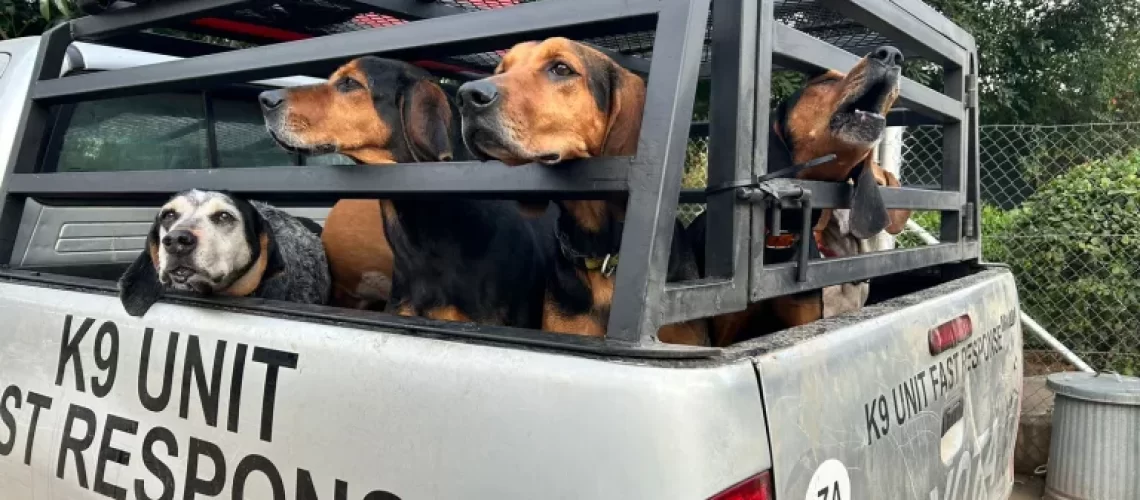
In the world of law enforcement and rescue operations, the presence of K-9 units often conjures up images of heroic dogs leaping through the air to apprehend bad guys or bravely rescuing people from disaster scenes. Oh, how heartwarming it is to see our furry four-legged friends in action! But let’s not be fooled by the charming facade – behind those wagging tails and adorable expressions lies a force to be reckoned with. Welcome to the intriguing universe of K-9 specialties, where sarcasm meets professionalism.
These K-9 units aren’t just a delightful addition to department parades or a surefire hit at elementary school show-and-tells. They are, in fact, a potent and crucial asset within the world of rescue and law enforcement. In this article, we’ll dive deep into the diverse K-9 specialties, highlighting their real importance beyond the cuddly exterior.
Unleashing the K-9 Specialists
K-9 units encompass a wide array of specialties, each tailored to specific tasks and missions. And trust us, these remarkable canines are more than just pets with badges. They are highly trained, finely tuned, and unbelievably skilled experts in their respective fields.
- Patrol Dogs: These are the workhorses of law enforcement. Patrol dogs are trained to apprehend suspects, protect their handlers, and maintain order in a variety of situations. They’re the ones who make you think twice about running from the law.
- Narcotics Detection Dogs: Meet the canine detectives who can smell trouble a mile away – or rather, a stash of illegal substances hidden deep within luggage or vehicles. Narcotics detection dogs are instrumental in busting drug traffickers and keeping our streets safe.
- Explosives Detection Dogs: When it comes to defusing potentially deadly situations, explosives detection dogs are our heroes. They have an unparalleled nose for sniffing out hidden bombs, ensuring public safety at airports, events, and critical infrastructure.
- Search and Rescue Dogs: In the darkest hours of disasters, it’s the search and rescue dogs who shine the brightest. These K-9 heroes navigate treacherous terrain to locate survivors buried beneath rubble, often making the difference between life and death.
And many many others….
But hey, don’t be fooled into thinking that their remarkable skills are just for show. These dogs are trained rigorously and tirelessly, often outperforming their two-legged counterparts when it truly matters.
Beyond Photo Ops and Paw Prints
Now, let’s address the elephant in the room – or should we say, the “paw-fficer” in the precinct. K-9 units are not a gimmick or a feel-good photo opportunity. They are not just cute faces to share on social media or to entertain the public. These specialized units represent a formidable asset that can, quite literally, make or break critical operations.
Imagine a world where these highly trained dogs are fully understood, utilized, and appreciated by their human counterparts. Unfortunately, that’s often far from the reality we encounter. Many non-K-9 units within law enforcement and rescue agencies lack a fundamental understanding of how K-9 teams operate and what they bring to the table.
It’s not uncommon for K-9 handlers to raise an eyebrow in exasperation as their colleagues fumble in the dark, figuratively speaking, when it comes to coordinating efforts. The issue here is not the dogs; it’s the humans who often seem clueless about how to tap into the K-9 potential effectively.
But fear not, dear reader, for in the following sections, we will explore the intriguing dynamics between K-9 units and their non-K-9 counterparts. We’ll uncover tales of miscommunication, missed opportunities, and, yes, the occasional success story that leaves us hopeful for a brighter, more synergistic future. It’s time to lift the curtain on the real world of K-9 operations, where the true potential of these four-legged forces is often underestimated, and where collaboration may just hold the key to unlocking their full potential.
The Underutilized Potential of K-9 Units
K-9 units possess a unique set of skills that can tip the scales in favor of law enforcement and rescue missions. To truly appreciate their value, we must first understand what these remarkable dogs bring to the table.
- Incomparable Senses: Canines possess a sense of smell that is beyond human comprehension. While we might struggle to pick out individual ingredients in a pot of soup, K-9s can isolate scents with pinpoint accuracy. This extraordinary olfactory ability is the foundation of their expertise in detecting narcotics, explosives, and missing persons.
- Unwavering Loyalty: K-9s form an unbreakable bond with their handlers, creating a level of trust and cooperation that is second to none. This bond allows them to work seamlessly in high-pressure situations, where split-second decisions can mean life or death.
- Speed and Agility: These dogs are more than just noses and loyalty; they’re also athletes. K-9s can sprint, leap, and navigate obstacles with remarkable precision, making them indispensable in chasing down fleeing suspects or searching for survivors in disaster-stricken areas.
- Communication: Handlers and their K-9 partners develop a unique language of signals and cues, allowing them to communicate silently during operations. This non-verbal communication is often more efficient than radio chatter and can be a game-changer in tactical situations.
Now, imagine a scenario where these skills are fully harnessed and integrated into the broader law enforcement and rescue efforts. Unfortunately, such synergy is too often a missed opportunity.
La divisione tra unità K-9 e non K-9
Picture this: a high-stakes operation is underway, and the K-9 unit is on the scene, ready to do what they do best. But as they await their cue, it becomes apparent that their non-K-9 colleagues are unsure about how to effectively leverage their unique talents.
The result? A fumbled operation, miscommunication, and potentially disastrous consequences. It’s a head-scratching, eye-rolling moment for K-9 handlers who know that these situations could be avoided with better inter-unit understanding and coordination.
One recurring issue is that non-K-9 units often lack awareness of when to call in the K-9 specialists. These units might be hunting for a suspect in a densely wooded area, unaware that a patrol dog with an exceptional nose could swiftly resolve the situation. Or they may be searching a building for hidden explosives without realizing that an explosives detection dog could do the job faster and more safely.
To make matters worse, there’s often a gap in knowledge regarding the preparation needed to optimize K-9 performance. Picture a narcotics detection dog arriving at a cargo inspection site, only to find disorganized piles of crates and vehicles, making the search nearly impossible. The lesson? Preparation matters, and non-K-9 units must learn how to set the stage for their four-legged colleagues effectively.
Section 3: The Path to Effective Collaboration
In the midst of these tales of frustration and missed opportunities, there’s a glimmer of hope. Instances where K-9 and non-K-9 units successfully collaborate showcase the immense potential for synergy within the force.
These success stories highlight the importance of cross-training and fostering a culture of understanding between units. When non-K-9 officers receive training on when and how to involve K-9 teams, magic can happen. Clear communication channels are established, trust grows, and operations become smoother and more efficient.
For instance, search and rescue teams can learn to recognize when a search dog’s skills are needed to locate a missing person in a vast wilderness area. Narcotics detectives can coordinate with their K-9 counterparts to execute targeted raids on drug trafficking operations. Bomb disposal units can work hand in paw with explosives detection dogs to ensure the safety of public spaces.
In essence, effective collaboration between K-9 and non-K-9 units doesn’t just happen; it’s cultivated through training, communication, and a mutual respect for each other’s expertise.
The Lack of Understanding from Non-K-9 Units
We delve into real-life experiences that vividly illustrate how non-K-9 units have often failed to grasp the full potential of their K-9 colleagues. These accounts serve as cautionary tales, shedding light on instances where ignorance has led to inefficiencies and problems during critical operations.
- The Vanishing Perp: A Tale of Missed Opportunities
Imagine a tense standoff in an urban setting, with officers frantically searching for a suspect who has vanished into a maze of alleys and abandoned buildings. Amid the chaos, a patrol dog eagerly awaits the call to action, ready to use its unparalleled tracking abilities. But the call never comes.
Instead, officers opt for a traditional manhunt, relying on their instincts and a smattering of evidence. Hours pass, and the suspect remains at large. It’s a frustrating and all-too-common scenario, where non-K-9 units fail to recognize the potential of their canine counterparts.
A testimonial from a K-9 handler in this situation might go something like this:
“We had the perfect tool at our disposal – a patrol dog trained to track scents over urban terrain. But the other officers didn’t understand how quickly and effectively our K-9 could locate the suspect. They assumed that old-fashioned legwork would suffice. Hours later, the suspect was apprehended, but it could have been a much smoother operation with the K-9’s assistance.”
- The Hidden Stash: Where Narcotics Detectives Miss the Scent
In the world of narcotics investigations, time is of the essence. Seizing illegal drugs before they hit the streets can save lives and disrupt criminal networks. But in some cases, a lack of understanding about the capabilities of narcotics detection dogs can result in missed opportunities.
Consider a scenario where narcotics detectives, armed with search warrants, raid a suspected drug den. They meticulously search every nook and cranny, but the drugs remain elusive. Unknown to them, a narcotics detection dog stands by, ready to pinpoint the exact location of the stash.
A K-9 handler’s testimony could recount the situation:
“Our narcotics detection dog was raring to go, but the detectives insisted on their systematic search. They didn’t realize that our K-9 could have found the drugs in a matter of minutes. It was frustrating to watch them struggle while our dog could have wrapped it up quickly. In the end, they found the drugs, but only after a painstaking search that could have been avoided.”
- The Ticking Clock: Explosives Detection Delayed
In the high-stakes world of explosives detection, timing is everything. Every minute counts when it comes to locating and neutralizing potential threats. Yet, there have been instances where non-K-9 bomb disposal units have operated without considering the unique skills of their explosives detection dog counterparts.
Imagine a suspicious package found at a crowded transportation hub, and a bomb disposal unit rushes to the scene. The human technicians painstakingly inspect the package and decide to evacuate the area, delaying the operation. Meanwhile, an explosives detection dog could have quickly determined whether the package contained a real threat, expediting the response.
An explosives detection dog handler might lament:
“Our K-9 was trained to swiftly identify explosives, even in complex environments. It was disheartening to watch the unit opt for a lengthy evacuation when our dog could have determined the situation’s urgency in moments. Fortunately, it turned out to be a false alarm, but it highlighted the need for better understanding and coordination.”
These real-world scenarios underscore the unfortunate reality – non-K-9 units often miss the forest for the trees when it comes to recognizing the potential of their canine colleagues. The consequences can range from inefficiencies and delays to jeopardizing public safety. It’s imperative that the gap in understanding is bridged, ensuring that K-9 units are utilized to their full potential and that critical operations run as smoothly and effectively as possible.
Effective Collaboration between Units
We explore success stories that demonstrate the powerful synergy achieved when K-9 and non-K-9 units work together seamlessly. These tales of triumph underscore the immense potential for collaboration within the force. Additionally, we delve into strategies for improving this collaboration through training and mutual understanding.
- The Swift Apprehension: When Patrol and K-9 Join Forces
Picture a tense standoff involving an armed suspect who has barricaded himself in a building. The situation is volatile, and time is of the essence. In this scenario, a patrol officer recognizes the value of their K-9 counterpart.
With clear communication and trust, the patrol officer and K-9 handler coordinate their actions flawlessly. While the patrol officer maintains a safe distance, the K-9 is sent in to subdue the suspect swiftly and safely. The result? A successful apprehension without risking human lives.
One officer might recount the experience:
“In that moment, we knew that the K-9 unit was our best option. We had practiced this scenario, and our trust in each other was unshakable. It was a textbook example of how teamwork between K-9 and non-K-9 units can lead to a smooth operation with minimal risk.”
- The Trail of Success: K-9 and Search and Rescue Find a Missing Child
In the heart of a dense forest, a child goes missing. Search and rescue teams mobilize, but they face a daunting task. Enter the search and rescue dog, trained to locate missing persons in challenging environments.
Working in perfect harmony, the search and rescue team coordinates with their K-9 counterpart. The K-9’s keen nose picks up the scent, and they swiftly guide the rescuers to the child’s location. The child is found safe and sound, thanks to the combined efforts of the K-9 and human teams.
A search and rescue team member might share the experience:
“Our K-9 partner was the key to this successful rescue. Their ability to cover ground quickly and locate the scent trail was unparalleled. It highlighted the importance of understanding and utilizing our K-9 colleagues effectively in search and rescue missions.”
- The Controlled Detonation: Explosives Detection and Bomb Disposal in Harmony
In a bustling city center, a suspicious package sparks alarm. The bomb disposal unit rushes to the scene, but they’re not alone. An explosives detection dog stands ready to assist.
With precise communication, the unit quickly assesses the situation. The dog is deployed to confirm the presence of explosives, and once the threat is confirmed, the bomb disposal team neutralizes it safely. The result? Averted disaster with minimal disruption to the public.
A member of the bomb disposal unit might reflect on the operation:
“This incident showcased how vital the collaboration between our explosives detection dog and our human team is. The dog’s ability to rapidly identify potential threats allowed us to act swiftly and decisively. It reinforced the need for ongoing training and coordination between K-9 and non-K-9 units.”
These success stories serve as inspiring examples of what can be achieved when K-9 and non-K-9 units work together seamlessly. The key to fostering such collaboration lies in training and mutual understanding. By providing cross-training opportunities, fostering clear communication, and ensuring that all units appreciate each other’s strengths, law enforcement and rescue agencies can maximize their effectiveness and better serve the communities they protect.
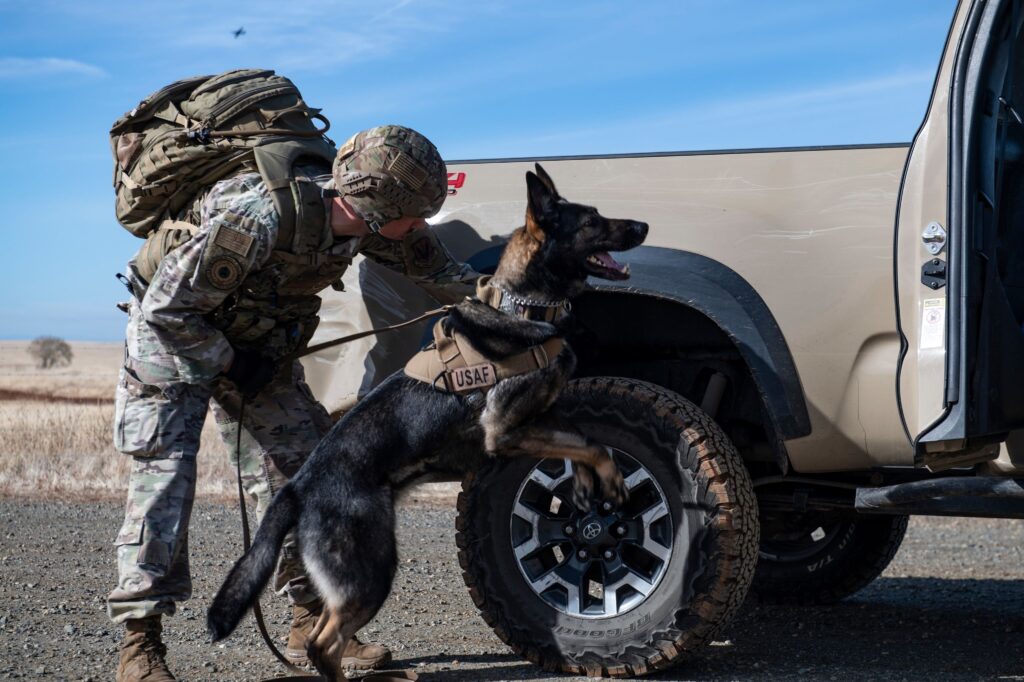
Setting the Stage for K-9 Units
We need provide practical suggestions for recognizing when to call in the K-9 cavalry and how to communicate effectively with these specialized units.
Buckle up; it’s time for a crash course in K-9 readiness.
- The Art of Preparedness: A K-9 Welcome Mat
Imagine you’re hosting an important guest in your home. You’d tidy up, lay out fresh linens, and prepare their favorite meal. Similarly, preparing for a K-9 unit’s arrival requires forethought and readiness.
- Understand Their Expertise: Recognize that K-9 units bring unique skills to the table. Whether it’s tracking suspects, detecting narcotics, or sniffing out explosives, these dogs have superpowers. Before an operation, consider whether these skills could be advantageous.
- Early Involvement: Don’t wait until the eleventh hour to call in K-9 units. Involve them early in the planning phase, allowing ample time for preparations. Remember, these dogs need the stage set before they can perform their magic.
- Scene Safety: Ensure that the operational area is safe for K-9 deployment. Remove potential hazards, secure the perimeter, and communicate any specific risks to the K-9 handlers. After all, their safety is paramount.
- Clear Communication: Establish direct communication channels with K-9 handlers. Develop a mutual understanding of cues, signals, and commands. Effective communication minimizes misunderstandings and enhances operational efficiency.
- The K-9 Bat-Signal: When to Call in the Canines
K-9 units aren’t the Bat-Signal, but they sure come close when the situation demands their expertise. Recognizing when to summon these four-legged specialists is crucial for success.
- Complex Scenarios: When faced with intricate situations involving hidden suspects, narcotics, explosives, or missing persons, it’s time to dial K-9.
- Time Sensitivity: If time is of the essence and swift action is required, consider K-9 units. Their speed and precision can make a world of difference.
- High-Risk Operations: When the safety of officers and civilians is at risk, K-9 units can provide an added layer of protection and control.
- Search Challenges: In scenarios where traditional methods are less effective, such as dense forests, large areas, or chaotic scenes, K-9 units shine.
- Preventive Measures: Don’t limit K-9 units to reactive roles. Utilize them for proactive tasks like security sweeps before major events to deter potential threats.
- Speaking Canine: Communicating with Specialized Units
To make the most of K-9 units, it’s essential to speak their language. Clear communication fosters efficiency and success.
- Training Cross-Pollination: Encourage cross-training between K-9 and non-K-9 units. Understanding each other’s capabilities and limitations is a recipe for success.
- Common Lexicon: Establish a shared vocabulary. Ensure that terminology, signals, and commands are universally understood by all involved units.
- Regular Drills: Conduct joint exercises to simulate real-world scenarios. Practice makes perfect, and it’s an opportunity to fine-tune coordination.
- Debrief and Feedback: After operations, debrief with K-9 handlers to analyze performance. Gather feedback and insights to enhance future collaborations.
In the world of law enforcement and rescue operations, communication and preparation are the keys to effective collaboration between K-9 and non-K-9 units. By setting the stage, knowing when to call in the experts, and speaking the same language, agencies can maximize the potential of their K-9 teams and ensure that these canine specialists are always ready to unleash their superpowers when needed. After all, in the world of law enforcement, it’s not just about having the right tools; it’s about knowing how to use them effectively.
