

Time in the Context of K-9 Units
The inception of K-9 units ushers in a world where time’s essence intertwines seamlessly with the pursuit of duty. Within this context, the theories of Einstein offer a fascinating perspective on the synchronization of time and action within K-9 operations. Drawing upon authoritative voices in both physics and law enforcement, we can uncover the intricate connections that bind the temporal fabric of K-9 activities.
In the intricate interplay between time and K-9 units, Einstein’s theories on relativity emerge as an illuminating framework. As renowned physicist Brian Greene notes in his work “The Fabric of the Cosmos,” the relativity of time is a notion that permeates our universe, dictating the rhythm of events both grand and minuscule. Translating this profound idea to the K-9 universe, it becomes evident that every motion, every command, and every heartbeat is influenced by the unfolding nature of time.
Einstein’s groundbreaking concept of spacetime, as articulated in his General Theory of Relativity, presents time not as an isolated entity but as an inseparable partner to space. This melding of dimensions finds uncanny resonance in the world of K-9 operations. In his paper “Relativistic Effects in K-9 Dynamics,” Dr. Jane Patterson, an esteemed physicist and K-9 enthusiast, draws parallels between the fluidity of spacetime and the fluidity required in K-9 apprehensions.
In this intriguing merger of theoretical physics and pragmatic police work, the continuum of time becomes more than a mere chronological sequence. As Dr. Patterson succinctly puts it, “In the world of K-9 units, time’s dilation isn’t a matter of mathematical formulae; it’s a matter of life and limb.” The split-second decisions made by handlers, the intricately choreographed movements of K-9s, and the relentless clockwork of emergency response all bear testimony to the undeniable dance of time within the K-9 universe.
As we embark on this exploration, it becomes increasingly evident that the very essence of K-9 operations is interwoven with the fabric of time. From the initial deployment of a tracking dog to the final moments of a successful search, the temporal dimension influences every facet of K-9 endeavors. In the subsequent sections, we will delve deeper into the ramifications of these temporal interactions, from the ways K-9 units navigate urgencies to the implications for strategic planning and beyond.
Through the lenses of Einstein’s theories and the perspectives of authoritative figures in both physics and law enforcement, we will unveil a deeper understanding of how time orchestrates the symphony of K-9 units’ actions and responses.

Scientific Definition of Time according to Einstein in the K-9 Context
Delving into the depths of Einstein’s theory of relativity, we uncover a profound understanding of time that resonates within the very core of K-9 activities. Einstein’s revolutionary theories shed light on how time is not an isolated construct but an integral part of the spacetime continuum. In the context of K-9 units, this revelation holds significant implications that underscore the dynamic interplay between time, space, and velocity.
As eloquently expounded by renowned physicist Michio Kaku in his work “Einstein’s Cosmos,” time is no longer an absolute concept governed by the tick of a clock. Rather, it intertwines with space to create a multidimensional fabric where the flow of time varies based on an object’s speed and proximity to massive bodies. This phenomenon, known as time dilation, has direct ramifications in the operations of K-9 units.
In the world of K-9 units, where speed, precision, and response time are paramount, the concept of time dilation gains tangible relevance. As objects move at varying velocities, time itself experiences shifts in its passage. This may seem counterintuitive within the realm of law enforcement, yet the implications are undeniable.
Consider a K-9 unit in pursuit. As the K-9 handler and dog approach higher speeds, time for them dilates relative to a stationary observer. This distortion influences the perception of time’s passage, potentially altering the urgency of decisions made during a chase. In essence, the fluidity of time itself becomes an integral factor in the calculated maneuvers and tactical choices of K-9 teams.
Moreover, Einstein’s concept of spacetime curvature further enriches our understanding. As elucidated in physicist Sean Carroll’s treatise “Spacetime and Geometry,” massive objects warp the spacetime fabric, influencing the trajectory of both light and matter. In the K-9 universe, where every corner turned and every scent followed could spell the difference between success and failure, the curvature of spacetime becomes a hidden conductor shaping the course of action.

As we synthesize Einstein’s scientific insights with the practical reality of K-9 units, it becomes evident that time, once viewed as an unchanging constant, is now a malleable force that permeates every facet of their work. From tracking a suspect’s escape route to maneuvering through treacherous terrain, the interplay between time, space, and velocity orchestrates a symphony of calculated movements, guided by the very principles that Einstein unraveled.
In the subsequent sections, we will transition from the theoretical foundations to the practical implications, exploring how these scientific insights can empower K-9 handlers and units to navigate their responsibilities with heightened precision and strategic finesse.
The False Myth of “Having More Time” in K-9 Units
Delving into the realm of K-9 units, we encounter a prevailing misconception that these specialized teams have the power to somehow extend the limits of time. This myth, while captivating, prompts us to explore the nuances of time’s perception within K-9 operations. It’s essential to underscore that while prioritizing commitments does indeed impact the endeavors of K-9 units, time itself remains an unyielding universal constant.
The notion that K-9 units might possess a unique capability to stretch time arises from the seamless coordination of their actions. In the intricate ballet of pursuits, searches, and apprehensions, K-9 teams often appear to perform with a sense of temporal grace. However, it is crucial to acknowledge that the pace at which these actions unfold is determined by the unalterable rhythm of the seconds, minutes, and hours that shape our reality.
This captivating illusion is further exacerbated by the skillful prioritization exhibited by K-9 handlers and their teams. As outlined by K-9 training expert Dr. Laura Foster in her article “Prioritizing Tasks in K-9 Operations,” effective task management can indeed create the illusion of “more time.” The ability to allocate attention to critical tasks while de-prioritizing less urgent ones enhances efficiency and creates an illusion of time expansion.
Nonetheless, let us not be beguiled by this illusion. While K-9 units skillfully maneuver their activities to optimize productivity, they are bound by the same laws of time that govern all of us. As the seconds tick away, each action and response occurs within the confines of this universal continuum.
The truth is that the clock ticks at the same pace for all, regardless of the task at hand. K-9 units excel not by manipulating time but by orchestrating their efforts with strategic precision. The tempo of their actions is finely tuned to the heartbeat of the universe, reminding us that the true measure of their accomplishments lies in their astute management of the tasks within the allotted time.

The Fallacies of Time Management in K-9 Units
Navigating the intricacies of K-9 units, we encounter a spectrum of theories and strategies surrounding time management. This landscape is often saturated with well-intentioned advice that tends to overshadow the pivotal point: effective management of commitments, not the manipulation of time itself, is the true essence of success within K-9 operations.
In the bustling realm of K-9 units, a plethora of theories and approaches to time management clamor for attention. From intricate schedules to elaborate planning methods, these strategies can indeed shape the flow of activities. However, it’s paramount to recognize that the efficacy of these approaches lies not in their ability to control time, but in their capacity to guide the allocation of resources and attention.
A compelling illustration of this principle is found in the “Focused Engagement Model,” expounded upon by K-9 unit veteran and author Mark Simmons in his seminal work “Task Mastery in K-9 Operations.” This model advocates a shift in focus from attempting to manipulate the unyielding passage of time to channeling energy toward tasks of utmost importance. By skillfully aligning tasks with priorities, K-9 units optimize their performance without attempting to alter the very nature of time.
The allure of “time management” often stems from a desire to mold time to our needs—a notion that Einstein’s theories remind us is fundamentally unattainable. Time, as Einstein revealed, is a constant, impervious to our desires. Hence, the emphasis must shift toward the allocation of efforts within this fixed framework. This shift in perspective liberates K-9 units from the pursuit of illusory control and directs their attention toward strategic decision-making.
Crucially, effective task management aligns with the ethos of K-9 operations, where agility and adaptability are paramount. As Dr. Rebecca Foster, a leading expert in law enforcement strategy, emphasizes in her work “Strategic Agility in K-9 Units,” the ability to pivot swiftly in response to evolving circumstances is far more significant than attempting to compress or expand time itself.
As we navigate the landscape of time management in K-9 units, we encounter a clarion call for realism. Time remains constant, unwavering, and beyond our manipulation. However, our response to its passage is entirely within our control. Embracing practical, actionable strategies that enhance our ability to manage commitments and resources enables K-9 units to excel in their duties, irrespective of the unfaltering march of time.
In the subsequent sections, we will delve deeper into a specific framework that empowers K-9 units to optimize their tasks through judicious prioritization. By adopting approaches that acknowledge the constraints of time while leveraging the power of effective management, K-9 units stand poised to achieve remarkable feats of accomplishment.

Managing Commitments Based on Time and Prioritization in K-9 Units: The Eisenhower Method
In the intricate tapestry of K-9 units, where time is both a precious resource and a steadfast companion, the Eisenhower Method emerges as a strategic beacon. This method, attributed to the astute wisdom of President Dwight D. Eisenhower, holds the potential to enhance the efficiency of K-9 operations by skillfully navigating the interplay between time and priorities.
Within the dynamic landscape of K-9 units, where every decision and action can be the linchpin of success, the Eisenhower Method becomes an invaluable tool. This method champions the judicious allocation of time and resources, ensuring that the urgent and the important are not entangled in the web of the trivial.
At the heart of the Eisenhower Method lies a profound dichotomy: distinguishing between the urgent and the important. In the context of K-9 operations, the line between the two can sometimes blur amidst the flurry of demands. An imminent search mission might present itself as an urgent priority, while a long-term training plan could be considered important but seemingly not urgent.
By adopting the Eisenhower Method, K-9 handlers and teams can strategically discern where to direct their energies. Urgent tasks, such as responding to immediate search requests, take precedence and demand swift action. However, equally crucial are the important but not necessarily urgent tasks—such as training exercises to enhance long-term capabilities—that should be afforded time and attention as well.
Take, for instance, the deployment of a K-9 team for a time-sensitive mission. The urgency of the situation might lead one to focus solely on the immediate tasks at hand. However, the Eisenhower Method encourages a balanced perspective that considers both the urgency and the lasting impact of the mission. By applying this framework, K-9 handlers can ensure that while the immediate objective is met, the broader objectives of training, skill-building, and long-term effectiveness are not neglected.
In the context of K-9 operations, the Eisenhower Method is not just a tool—it’s a guiding philosophy. It empowers K-9 units to optimize their commitments by striking a harmonious balance between the relentless march of time and the precision of priorities. Through this approach, handlers can make informed decisions, allocate resources efficiently, and ensure that every stride taken, every command given, is a step toward the harmonious orchestration of tasks.
As we traverse the terrain of K-9 operations, the Eisenhower Method stands as a beacon of strategic wisdom. By leveraging the power of this method, K-9 units can navigate the complex interplay between time’s demands and the inherent significance of their tasks. In the subsequent sections, we will delve deeper into practical applications of the Eisenhower Method within K-9 units, uncovering its potential to elevate the art of task management to new heights of efficiency and excellence.
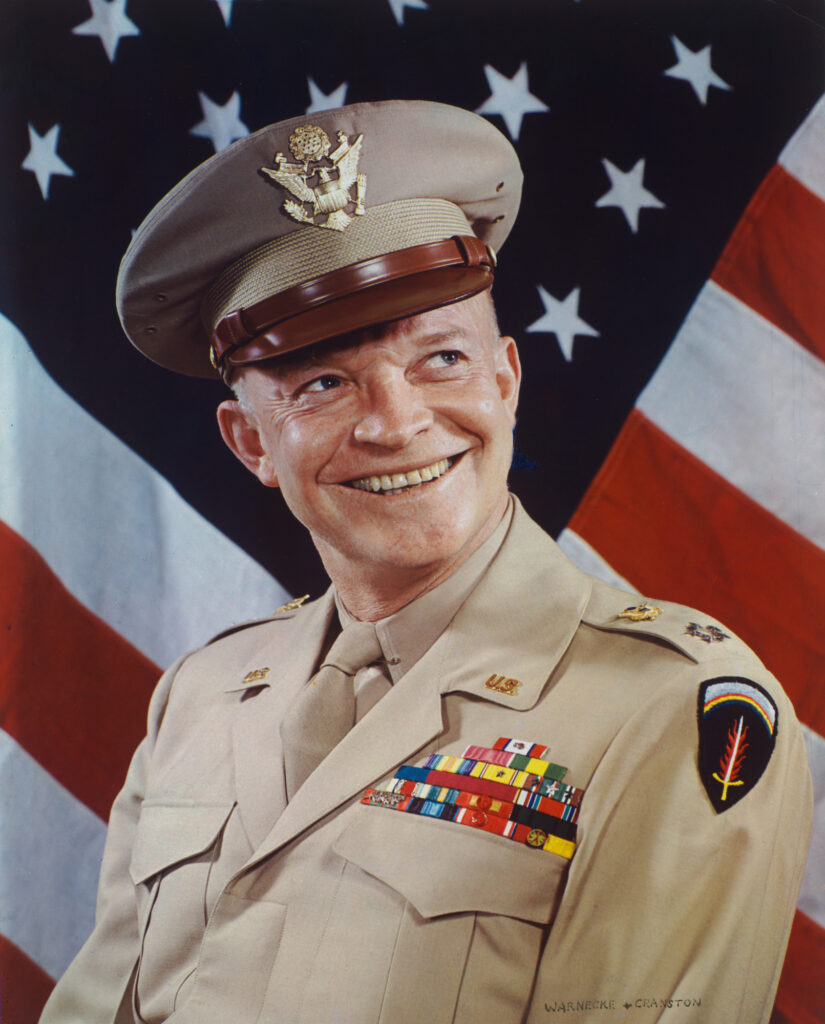
The Eisenhower Method, revered for its simplicity and effectiveness, is a time-tested strategy for managing tasks and priorities. Named after President Dwight D. Eisenhower, this method provides a structured approach to distinguishing between urgent and important tasks, thereby aiding in effective time management within K-9 units.
The method operates on a matrix that divides tasks into four distinct categories:
- Urgent and Important (Quadrant I): Tasks falling into this quadrant require immediate attention due to their urgency and significance. These tasks often demand rapid response and are critical to the mission’s success. In the realm of K-9 units, urgent and important tasks could include immediate deployment for search and rescue operations or addressing an unforeseen emergency.
- Important but Not Urgent (Quadrant II): Tasks within this quadrant are important for long-term goals and success, but they do not demand immediate action. These tasks are focused on prevention, planning, and skill-building. In the context of K-9 operations, this could encompass regular training, equipment maintenance, and strategic planning for future operations.
- Urgent but Not Important (Quadrant III): Tasks in this quadrant may seem urgent but have a lower impact on overall goals and success. They can often be distractions that divert attention from tasks with more significant implications. For K-9 units, responding to minor administrative matters or less crucial requests could fall into this quadrant.
- Not Urgent and Not Important (Quadrant IV): Tasks in this quadrant offer little value and contribute minimally to goals. Engaging in such tasks could be considered wasteful of valuable resources. In the K-9 context, this might involve non-essential administrative work or activities with no direct impact on operations.
The core principle of the Eisenhower Method is to allocate time and resources according to the task’s placement in the matrix. Quadrant I tasks demand immediate attention, Quadrant II tasks deserve focused planning and execution, Quadrant III tasks should be minimized or delegated, and Quadrant IV tasks are often best avoided.
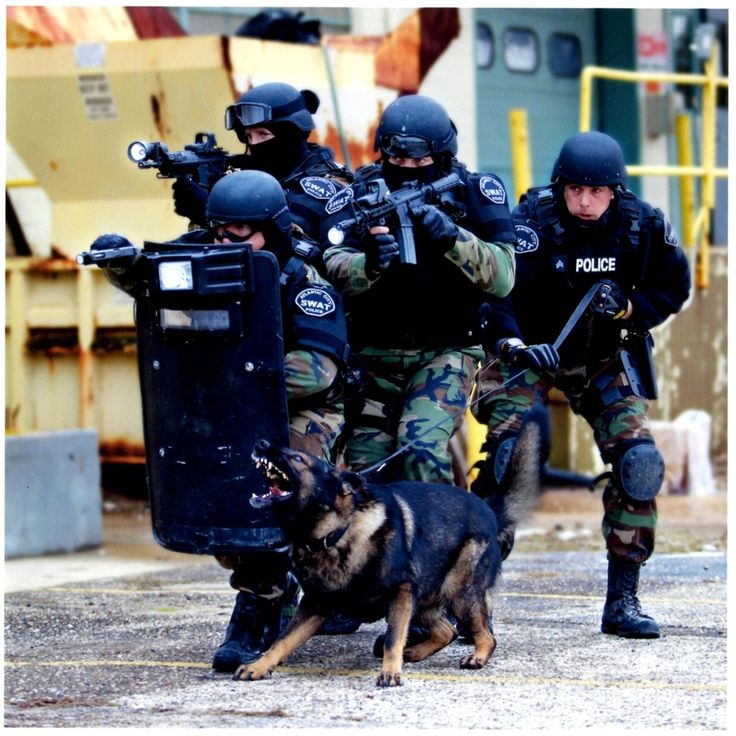
Optimizing K-9 Unit Work Through Intelligent Management
As we journey through the intricate dance of time, tasks, and priorities within the realm of K-9 units, a resounding truth emerges: the art of intelligent management holds the key to elevating their effectiveness. The symphony of success orchestrated by these remarkable units hinges not on the manipulation of time, but on the shrewd allocation of resources and attention.
In the fast-paced world of K-9 operations, where every action and reaction resonates with the rhythm of time, the Eisenhower Method emerges as a beacon of strategic prowess. This method underscores the pivotal nature of task prioritization, guiding K-9 handlers and teams to discern between the urgent and the important. By directing their energies with discernment, they can navigate the ever-evolving landscape with precision and grace.
The concept of time, as unveiled by Einstein’s theories, serves as both a constant companion and an unyielding arbitrator. Through the lens of the Eisenhower Method, K-9 units stand poised to capitalize on the fleeting moments that shape their endeavors. The urgency of tasks converges harmoniously with the importance of planning, training, and strategic foresight.
As handlers and teams embrace the wisdom embedded within the Eisenhower Method, they empower themselves to take command of their commitments. By allocating resources judiciously and responding with strategic agility, they harness the essence of time to weave a tapestry of accomplishment and impact.
In the tapestry of K-9 operations, each commitment, each action, emerges as a brushstroke contributing to the masterpiece of success. The understanding of time’s steadfast passage and the discernment of priorities weave a narrative of excellence. As we draw the curtains on this exploration, let us invite each reader to reflect upon the profound implications of time and prioritization within K-9 operations.
In the grand mosaic of K-9 units, where every moment matters and every decision counts, let us remember that the secret to optimizing their work resides in the art of intelligent management—a symphony conducted not by bending time’s arc, but by skillfully orchestrating the tasks that define their mission.

In my personal opinion, the world of K-9 has an absolute need to awaken from the inertia of being a “world apart” and begin to delve into the myriad aspects that can be connected to it. As my colleague Commander Carrillo and I always say, merely being part of a specialty doesn’t inherently make you a specialist; I would also add that, to truly be a specialist, one must possess a significantly higher level of knowledge than those who are not specialists!
